

Matthew Bell
Best dental practice we’ve ever had. Had a string of disappointments over the years and Pearly Whites is so well organised and professional.

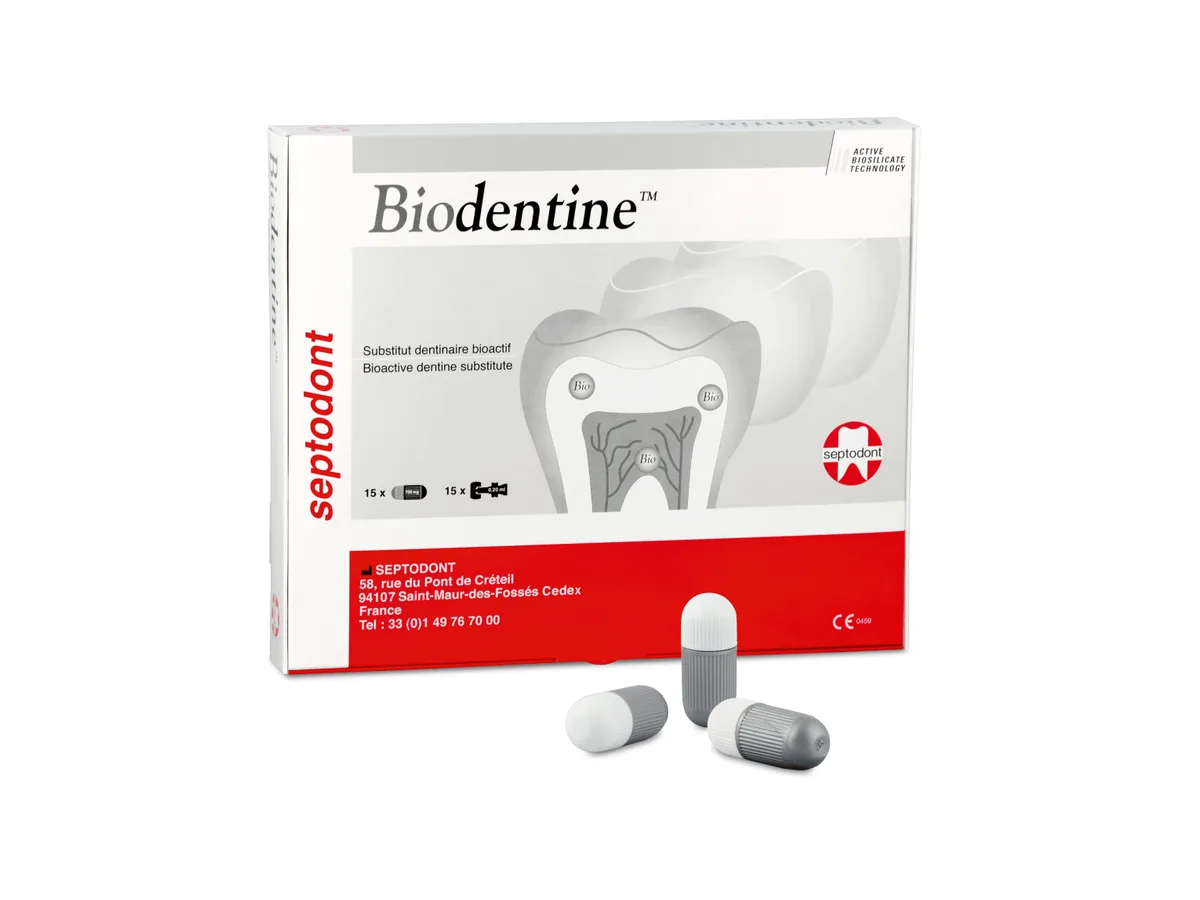
When decay reaches deep into a tooth, Biodentine helps the tooth heal itself and keep its nerve alive, so you can often avoid root canal treatment. We’re one of a small number of UK practices to use it.
4.6 from 300+ Google reviewsFamily-run practice on Munster Road, SW6
At a glance
Minimally invasive dentistry
Under your enamel is a layer called dentine, which protects the nerve at the heart of the tooth. When decay gets deep, only a thin layer of dentine may be left, and the nerve can become irritated. Traditionally, that often led to root canal treatment.
Biodentine is a bioactive dentine substitute. Rather than simply filling the space, it works with your tooth: it seals it, calms the nerve and encourages the tooth to lay down fresh dentine of its own, so the nerve can stay alive and healthy.
How it works
Biodentine bonds tightly to the tooth, sealing out the bacteria that cause decay and irritate the nerve.
Its naturally alkaline chemistry makes it hostile to bacteria left in the deepest part of the cavity.
It releases calcium, which encourages the tooth to form a new protective layer of dentine over the nerve.
It has similar strength to natural dentine, so it supports the filling or crown placed on top.
Why it matters
A tooth with a healthy, living nerve is a stronger tooth. Root canal treatment can save a tooth when the nerve is infected, but it means removing the nerve, and a root-treated back tooth becomes more brittle and usually needs a crown or onlay to protect it.
In clinical studies, around 8 to 9 in 10 deeply decayed teeth treated with Biodentine stayed healthy with no need for root canal treatment. If the nerve is already badly inflamed or infected, root canal treatment may still be the best option, and we’ll always tell you honestly.
It’s also far kinder to your budget. Biodentine and a white filling are from £400, a fraction of the cost of root canal treatment plus a crown, where the crown alone is from £1,050.
How we use it
Most often, as a protective lining over the thin layer of dentine left above the nerve, with your filling placed on top.
Fillings →For a heavily decayed tooth that needs an onlay or crown, as a lining to protect the nerve underneath.
Crowns and onlays →Sometimes, if a tiny part of the nerve is exposed while the decay is removed, Biodentine is placed directly over it to help it heal.
The story behind Biodentine
Biodentine is made by Septodont, founded in France in 1932 by Annie and Nestor Schiller, and still entirely family-owned today.
Septodont is the world’s leading maker of dental anaesthetic, producing around 500 million cartridges every year, so if you’ve ever been numbed at the dentist, there’s a good chance it was theirs.
After years of research into materials that behave like natural tooth, Septodont launched Biodentine in 2010, the first all-in-one material able to replace dentine. We’re proud to be one of a small number of UK practices using it to save more natural teeth.
Our approach
At Pearly Whites, we’re always looking for better ways to look after your teeth, and we invest in the latest, proven technology when it means gentler care and more of your natural tooth kept.
Helping deeply decayed teeth heal and keep their nerve.
Helping early decay heal, with no drilling and no injection.
Curodont Repair →Overjet highlights decay on your X-rays, a second pair of eyes that helps us catch it early.
Check-ups →Your appointment
We examine the tooth, take an X-ray and check the nerve is healthy enough to keep, then explain your options.
We numb the tooth so you’re comfortable, and you can watch something on the TV above your chair.
We gently remove the decay, keeping as much healthy tooth as possible.
We place Biodentine over the deepest part of the cavity, to seal and protect the nerve.
We place your filling on top, or prepare the tooth for an onlay or crown, and check it at your check-ups.
Side by side
| Feature | Deep filling with Biodentine | Root canal treatment |
|---|---|---|
| For | Deep decay where the nerve is still healthy enough to keep | A nerve that is badly inflamed, infected or has died |
| The nerve | Kept alive | Removed |
| Your tooth | Stays alive, and stronger | More brittle, so back teeth usually need a crown or onlay |
| Cost | From £400 with a white filling (£175 plus the filling) | Root canal treatment quoted at consultation, plus a crown or onlay from £1,050 on back teeth |
Costs
The £175 is for the Biodentine itself; your filling, onlay or crown on top is charged separately. With a white filling, it’s from £400, a fraction of the cost of root canal treatment plus a crown, where the crown alone is from £1,050.
Reviews
Best dental practice we’ve ever had. Had a string of disappointments over the years and Pearly Whites is so well organised and professional.
Best dental practive in area..✨️✨️✨️✨️✨️
Always made to feel valued as a patient, Dr Lia is a wonderful dentist.
Dr Lia and Nurse Shukri
Practice manager Zahra were all wonderful- I actually look forward to coming to the dentist. All so kind & competent & happy.
What a wonderful team! I can’t recommend the Invisalign treatment highly enough in the hands of this capable team. Thank you for all you’ve done over the last few months. A very happy client!
Questions
A bioactive material that replaces lost dentine, the layer protecting the nerve of your tooth. It seals the tooth and helps it repair itself. It’s made by Septodont, a French family company.
Often, yes. For deep decay close to the nerve, around 8 to 9 in 10 teeth treated with Biodentine stayed healthy with no need for root canal treatment, in clinical studies. If the nerve is already badly inflamed or infected, root canal treatment may still be the best option.
£175 for the Biodentine itself, with your filling, onlay or crown on top charged separately. PearlyPlan members save 10%.
Most often as a protective lining under a deep filling, onlay or crown. Sometimes it’s placed directly over a tiny exposure of the nerve to help it heal.
No more than a filling. We numb the tooth first, so you’re comfortable.
Yes, by a long way. Biodentine and a white filling are from £400, a fraction of the cost of root canal treatment plus a crown. On a back tooth, the crown alone is from £1,050, before the root canal treatment itself.
A tooth with a living nerve stays stronger. After root canal treatment, back teeth become more brittle and usually need a crown or onlay to protect them.
After a deep filling, some sensitivity is normal and can last as long as 2 to 3 weeks. If it gets worse or you have a throbbing pain, call us.
Yes, all our dentists use it when it’s right for your tooth.
Only a small number of UK practices use it so far. We use it because it lets us save more natural teeth.
Book an appointment, and we’ll do everything we can to save your tooth and its nerve.